

红黑树
2298 字
11 分钟
红黑树
1. 红黑树的概念
红黑树是一种自平衡的二叉搜索树,通过对节点颜色的约束来确保树的平衡性。每个节点额外存储一个颜色位(红色或黑色),通过特定的规则约束,保证从根到叶子的任何一条路径不会比其他路径长出2倍。
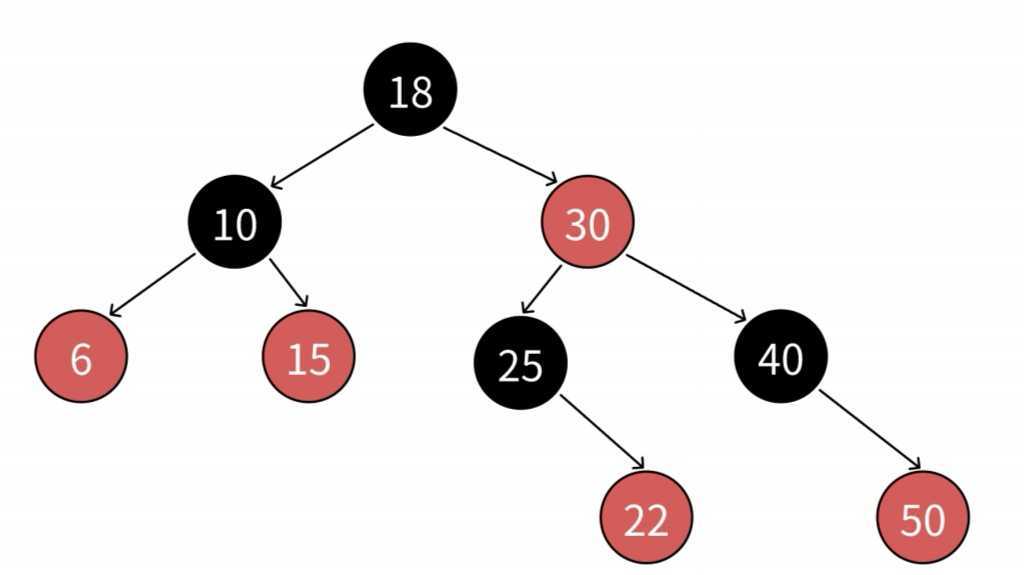
1.1 红黑树的规则
-
每个节点不是红色就是黑色
-
根节点是黑色的
-
红色节点的两个子节点必须是黑色的(不存在连续的红色节点)
-
从任一节点到其所有叶子节点(NIL节点)的路径上,黑色节点的数量相同
关于NIL节点的说明:《算法导论》等书籍中提到的”叶子节点”指的是NIL节点(空节点),这些节点被看作黑色。在实际实现中,我们通常用nullptr表示这些节点,但逻辑上认为它们是黑色的。
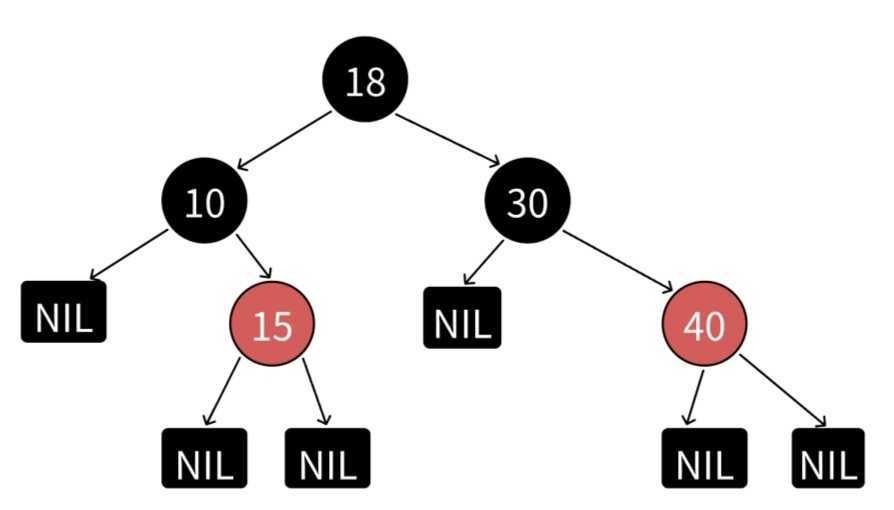
1.2 红黑树的平衡性分析
问题:红黑树如何确保最长路径不超过最短路径的2倍? 分析:
- 设从根到NIL节点的最短路径长度为
bh(black height,全黑路径) - 由规则4可知,所有路径的黑色节点数相同,都是
bh - 由规则3可知,红色节点不能连续,所以最长路径是黑红相间,长度为
2*bh - 因此,最长路径不超过最短路径的2倍
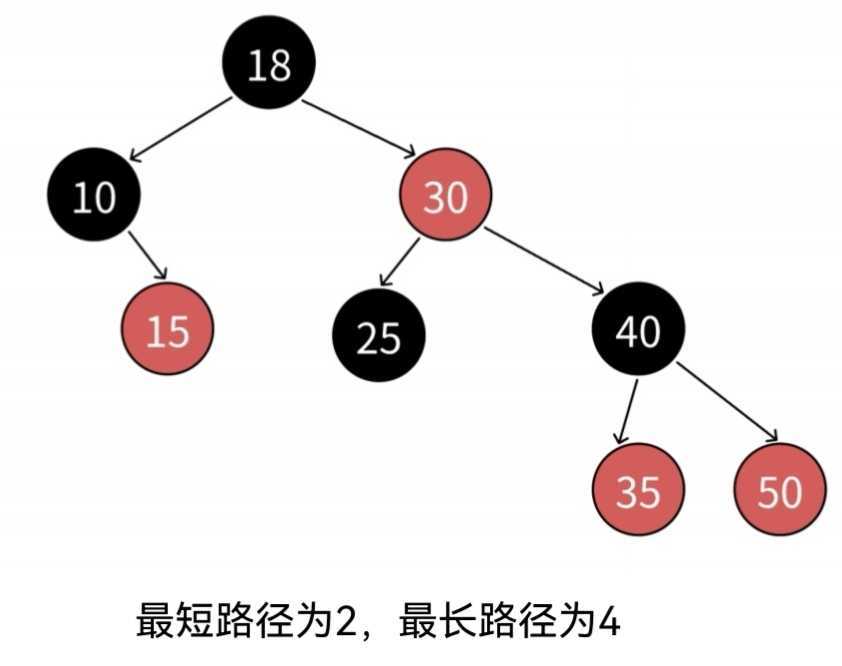
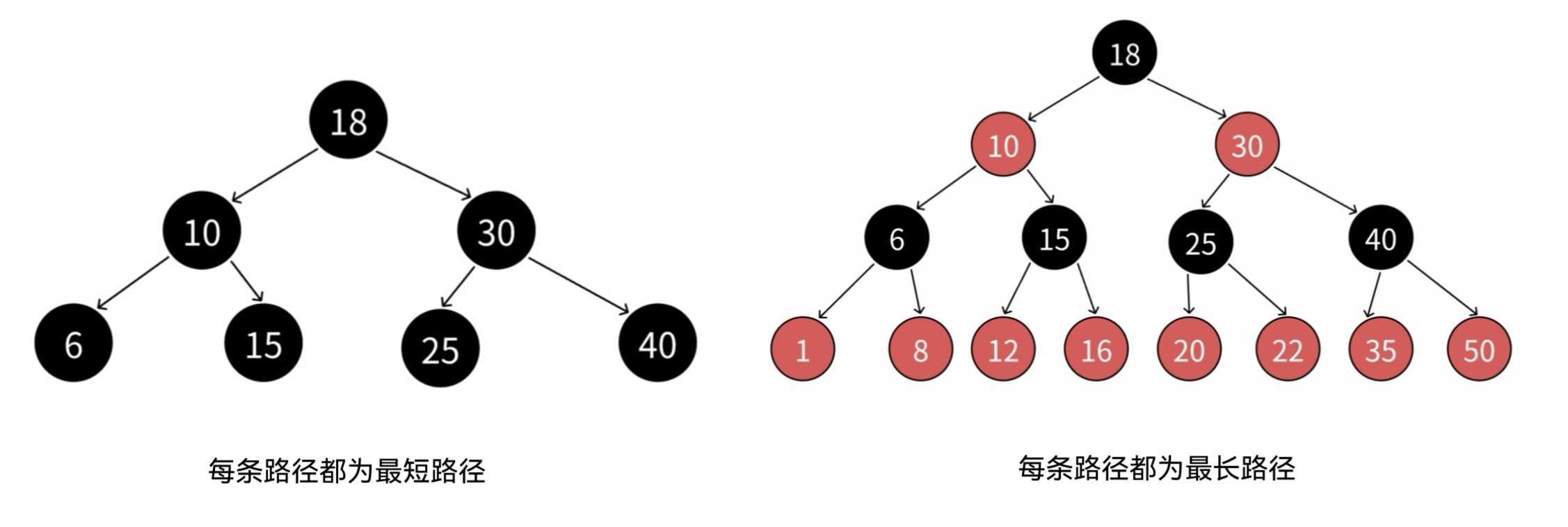
1.3 红黑树的效率
- 时间复杂度:O(logN)
- 与AVL树比较:
- AVL树:严格平衡,旋转次数多
- 红黑树:近似平衡,旋转次数少
- 两者都是O(logN),红黑树更适合频繁插入删除的场景
2. 红黑树的实现
2.1 红黑树的结构
// 枚举值表示颜色enum Colour { RED, BLACK};
// 红黑树节点结构template<class K, class V>struct RBTreeNode { // 键值对 pair<K, V> _kv;
// 三叉链结构 RBTreeNode<K, V>* _left; RBTreeNode<K, V>* _right; RBTreeNode<K, V>* _parent;
// 颜色 Colour _col;
// 构造函数 RBTreeNode(const pair<K, V>& kv) : _kv(kv) , _left(nullptr) , _right(nullptr) , _parent(nullptr) , _col(RED) // 新节点默认为红色 {}};
// 红黑树类template<class K, class V>class RBTree { typedef RBTreeNode<K, V> Node;
public: // 插入操作 bool Insert(const pair<K, V>& kv);
// 查找操作 Node* Find(const K& key);
// 验证红黑树 bool IsBalance();
private: Node* _root = nullptr;
// 旋转操作 void RotateL(Node* parent); // 左旋 void RotateR(Node* parent); // 右旋
// 检查函数 bool Check(Node* root, int blackNum, const int refNum);};2.2 红黑树的插入操作
2.2.1 插入过程概览
- 空树插入:插入节点作为根节点,颜色设为黑色
- 非空树插入:
- 按照二叉搜索树规则找到插入位置
- 新节点颜色设为红色(减少对规则4的影响)
- 如果父节点是黑色,直接插入完成
- 如果父节点是红色,需要进行调整
2.2.2 调整情况分析
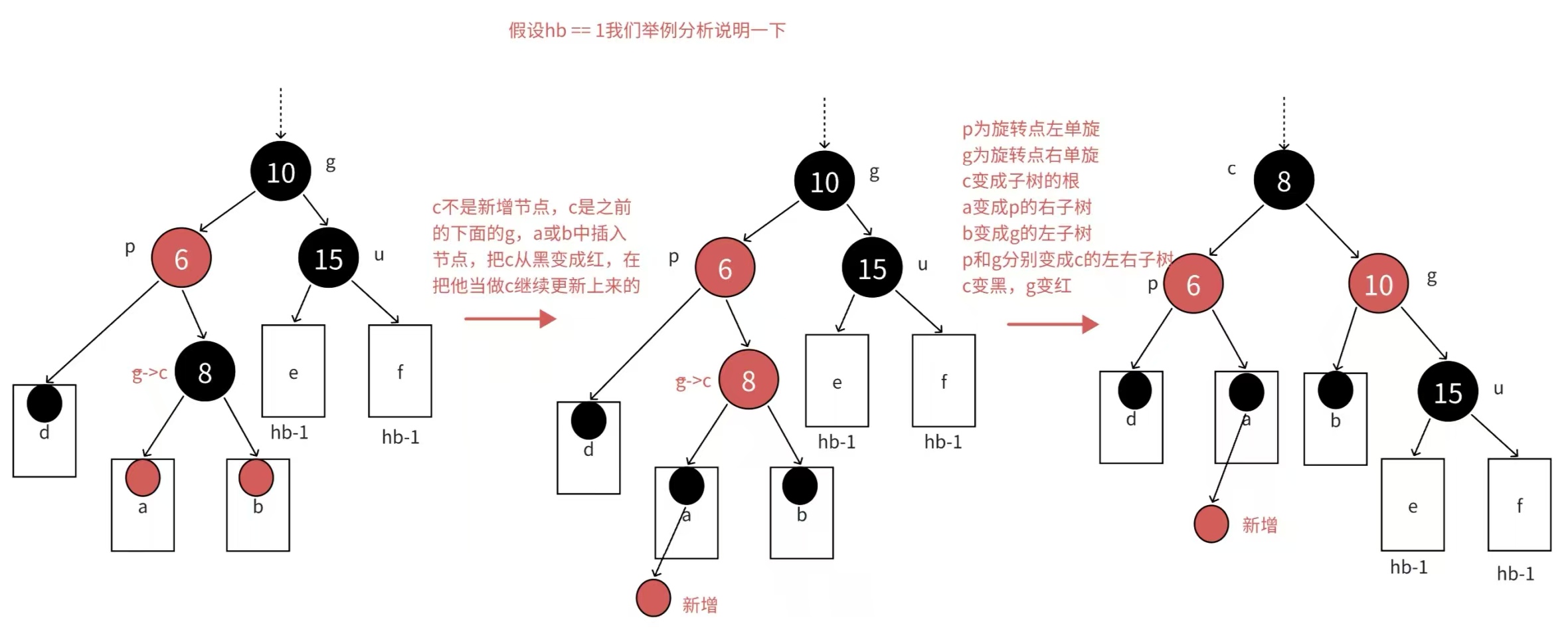
定义:
c(cur):当前节点(新增节点)p(parent):父节点g(grandfather):祖父节点u(uncle):叔叔节点(p的兄弟)
情况1:变色
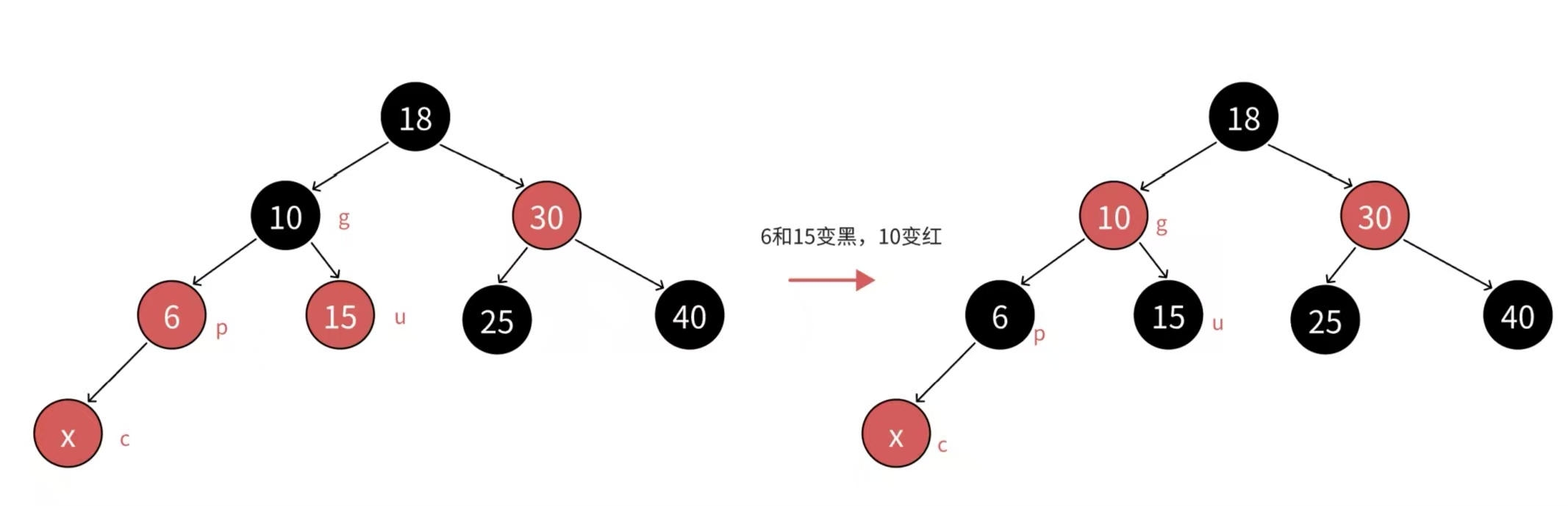
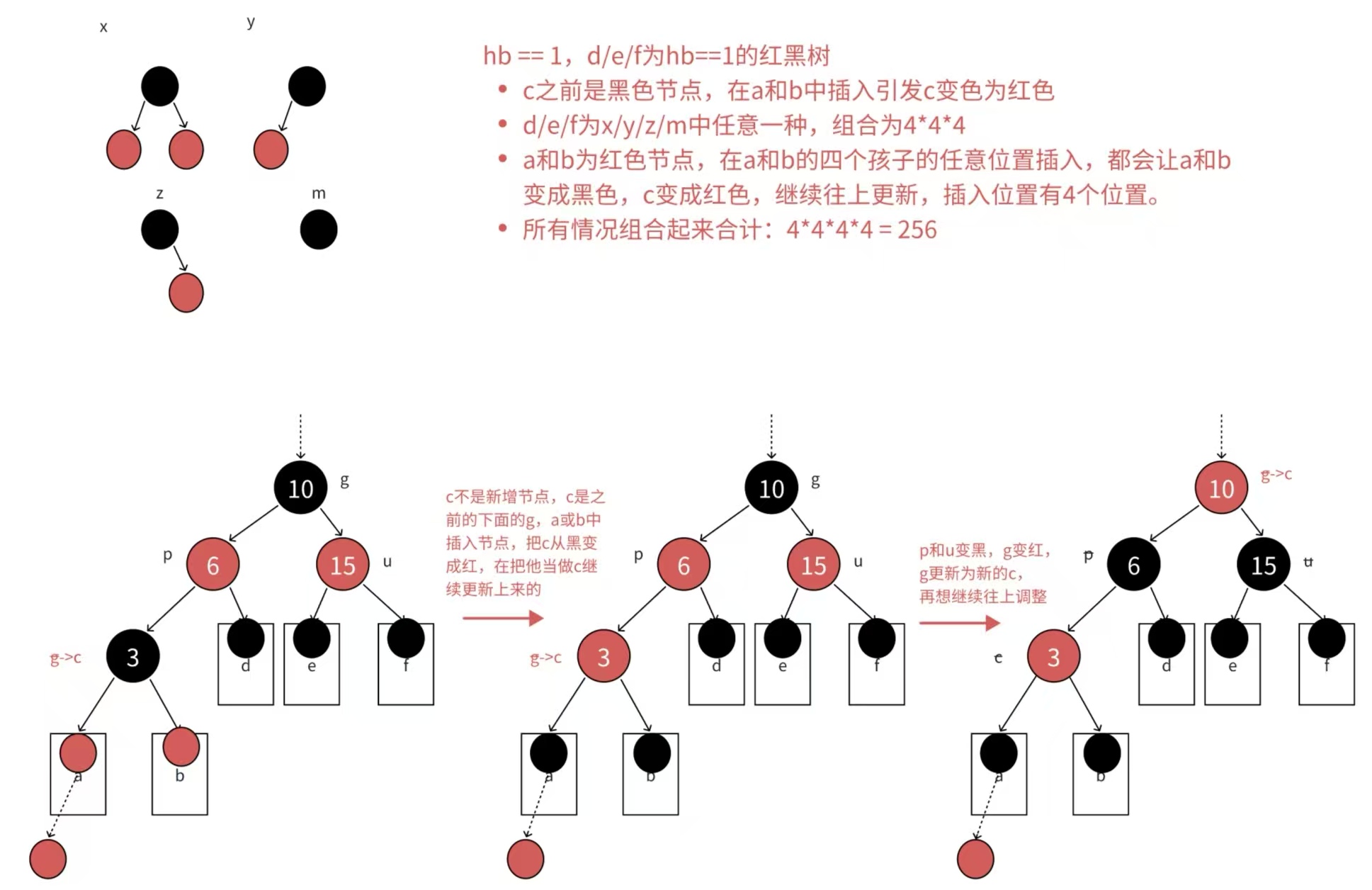
- 条件:c为红,p为红,g为黑,u存在且为红
- 处理:
- 将p和u变为黑色
- 将g变为红色
- 将g作为新的c,继续向上调整
- 如果g是根,最后将根变回黑色
// 情况1:变色处理if (uncle && uncle->_col == RED) { // u存在且为红 -> 变色再继续往上处理 parent->_col = uncle->_col = BLACK; grandfather->_col = RED;
cur = grandfather; parent = cur->_parent;}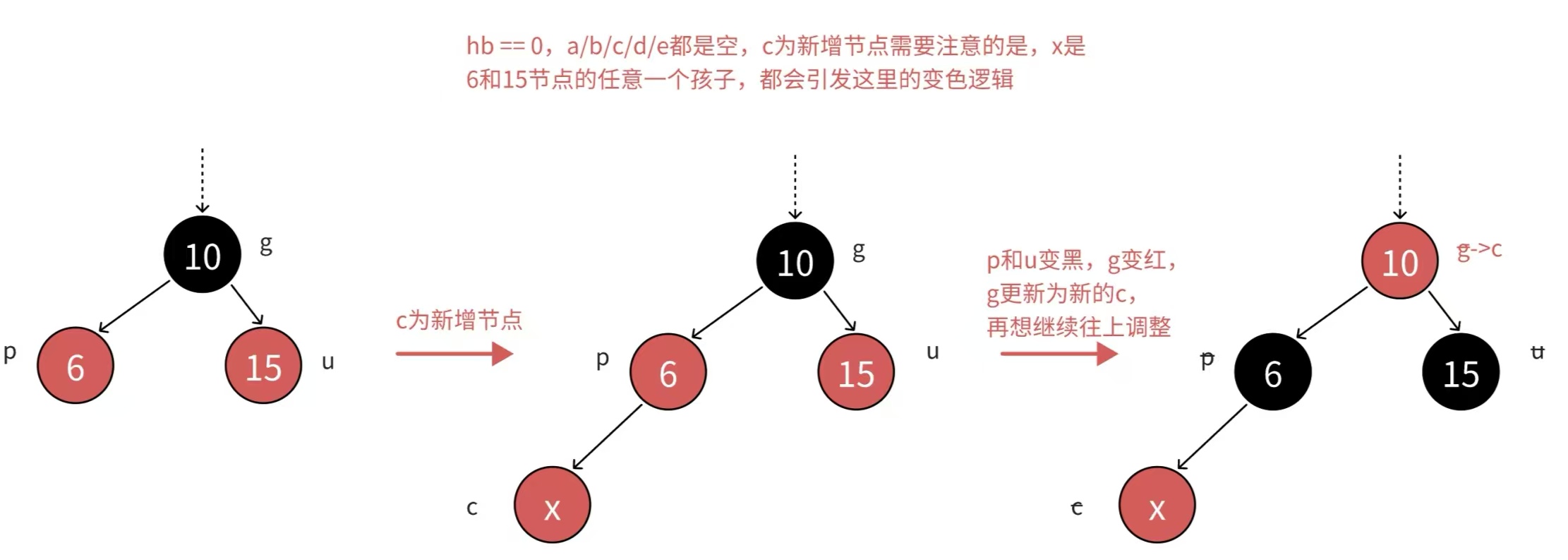
情况2:单旋 + 变色
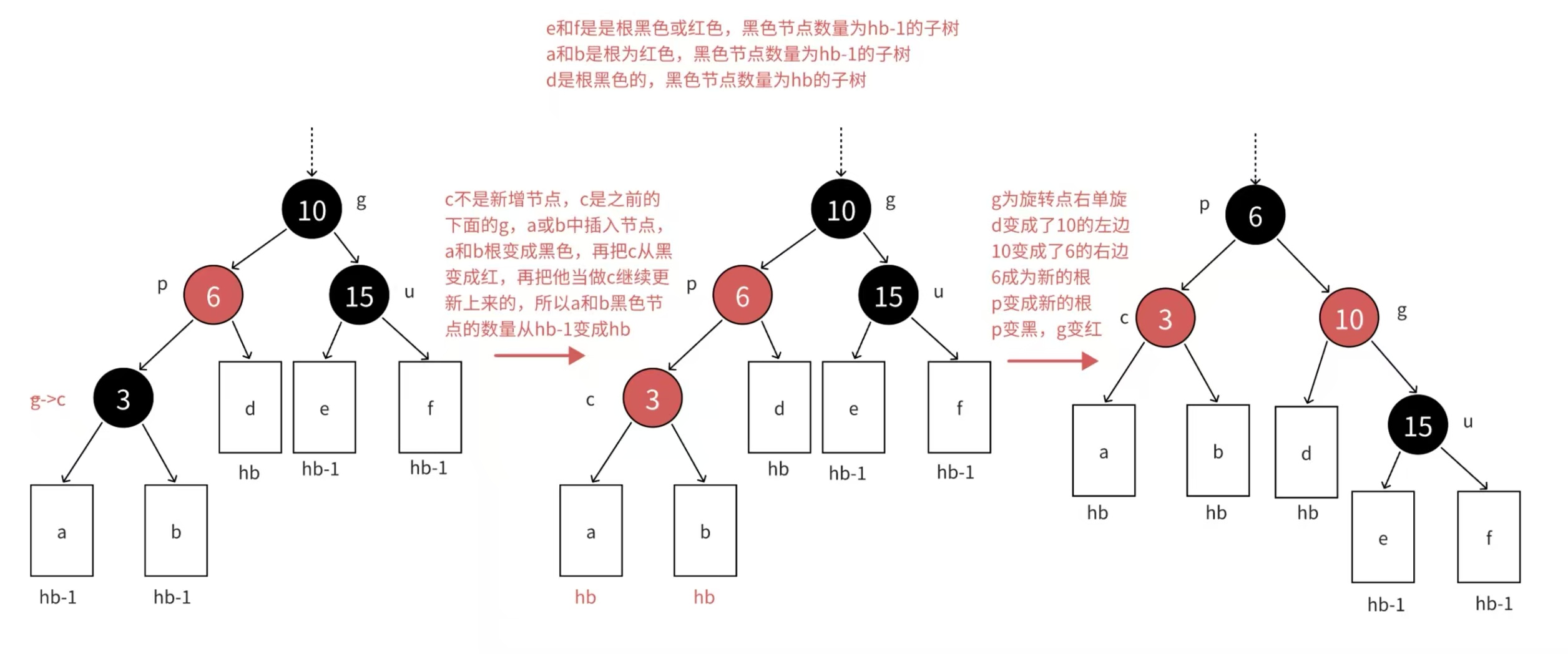
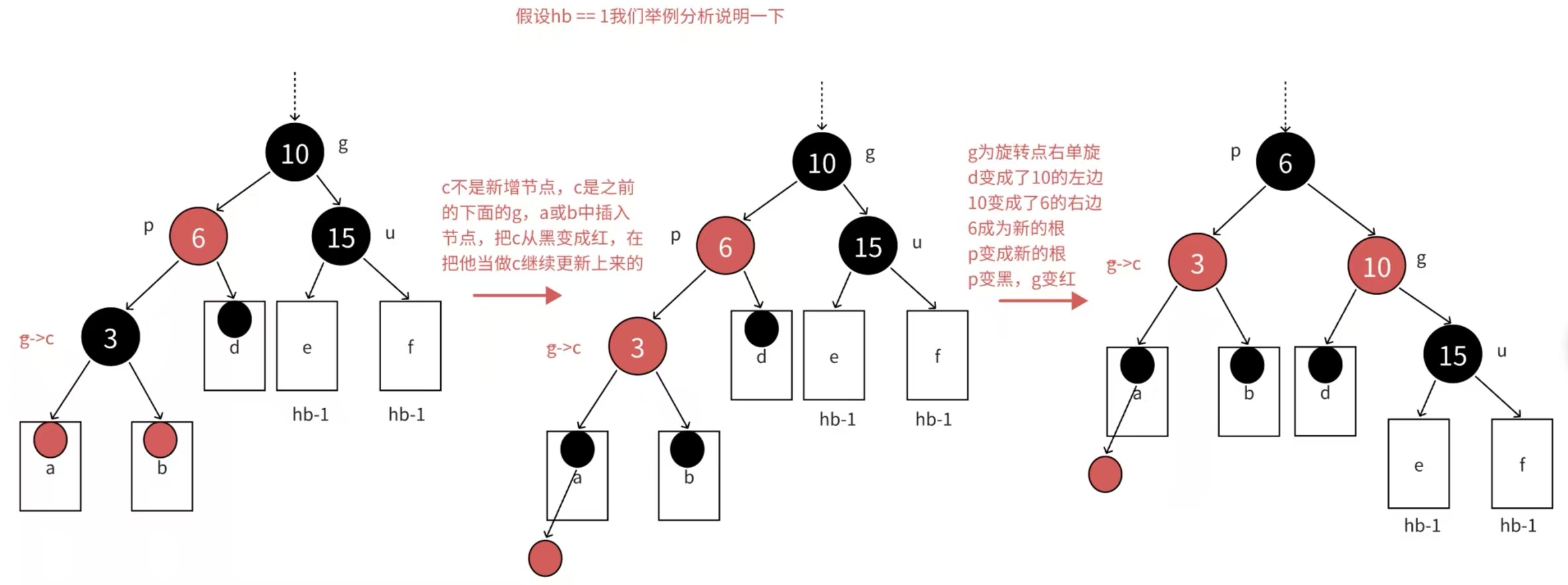
- 条件:c为红,p为红,g为黑,u不存在或u为黑
- 子情况:
- p是g的左,c是p的左:以g为轴右单旋
- p是g的右,c是p的右:以g为轴左单旋
- 处理:旋转后,p变黑,g变红
// 情况2-1:p是g的左,c是p的左(右单旋)if (cur == parent->_left) { // 单旋 RotateR(grandfather); parent->_col = BLACK; grandfather->_col = RED;}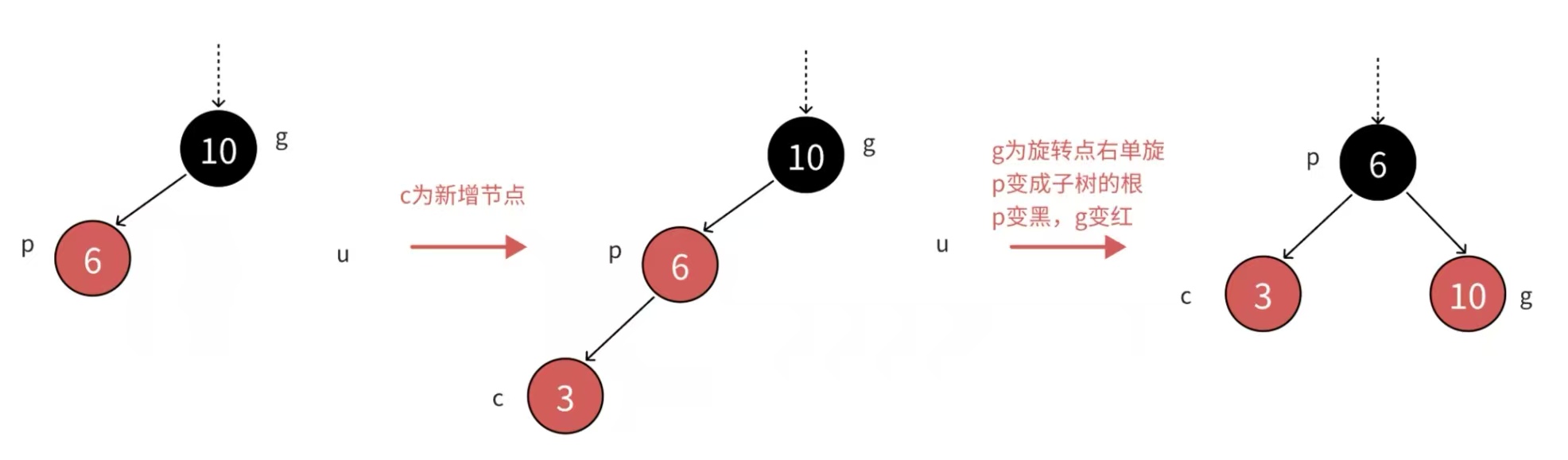
情况3:双旋 + 变色
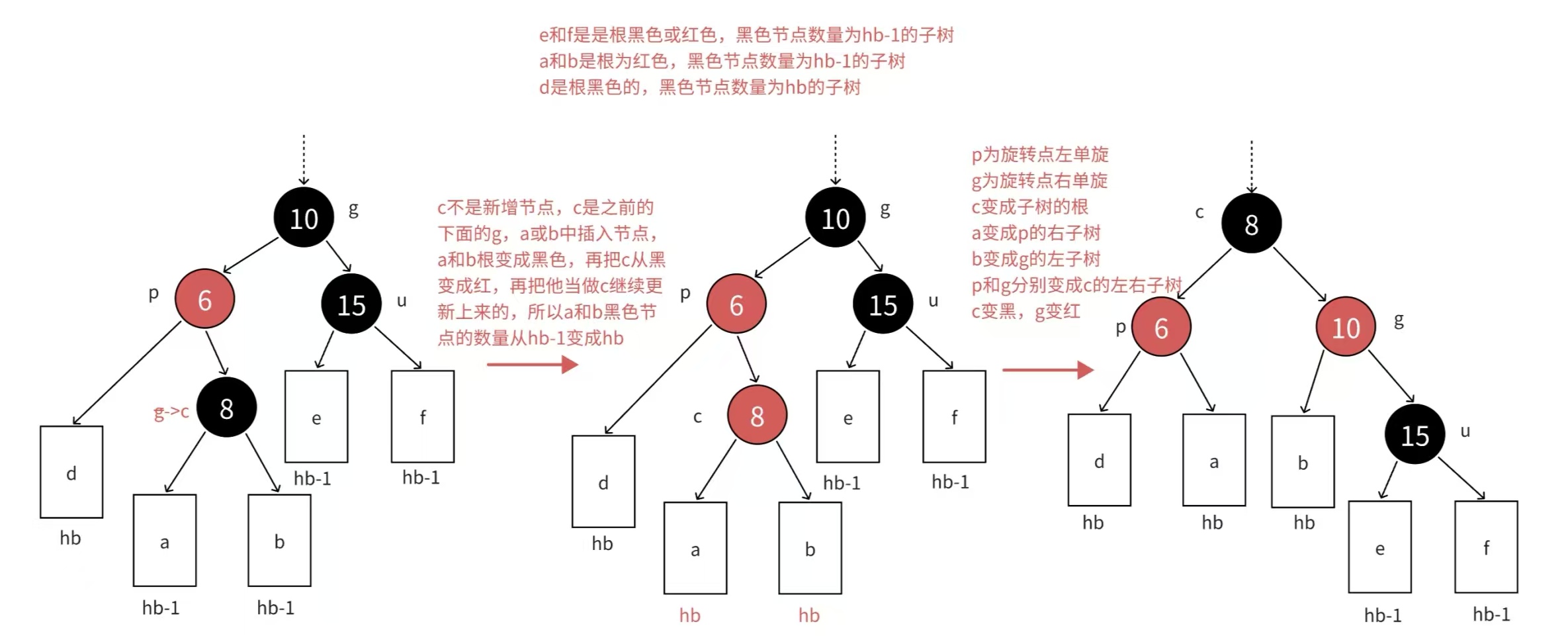
- 条件:c为红,p为红,g为黑,u不存在或u为黑
- 子情况:
- p是g的左,c是p的右:先以p左旋,再以g右旋
- p是g的右,c是p的左:先以p右旋,再以g左旋
- 处理:旋转后,c变黑,g变红
// 情况3-1:p是g的左,c是p的右(左右双旋)else { // 双旋 RotateL(parent); RotateR(grandfather);
cur->_col = BLACK; grandfather->_col = RED;}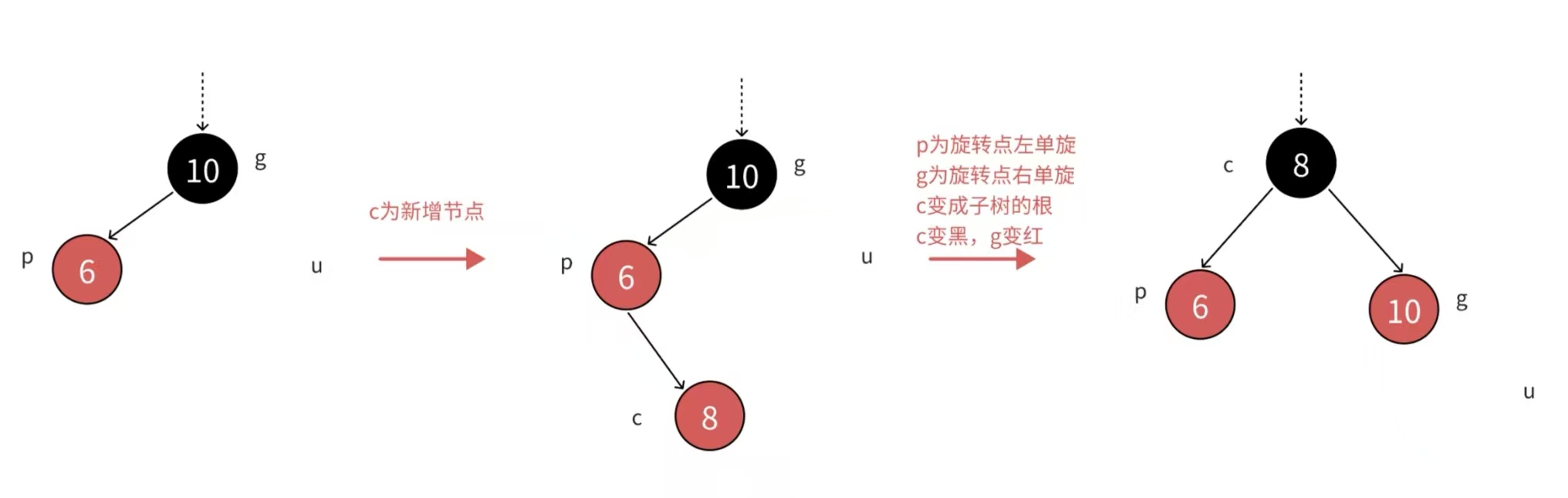
2.3 完整插入代码实现
template<class K, class V>bool RBTree<K, V>::Insert(const pair<K, V>& kv) { // 1. 空树情况 if (_root == nullptr) { _root = new Node(kv); _root->_col = BLACK; // 根节点必须为黑色 return true; }
// 2. 查找插入位置 Node* parent = nullptr; Node* cur = _root; while (cur) { if (cur->_kv.first < kv.first) { parent = cur; cur = cur->_right; } else if (cur->_kv.first > kv.first) { parent = cur; cur = cur->_left; } else { return false; // 键已存在 } }
// 3. 创建新节点 cur = new Node(kv); cur->_col = RED; // 新节点为红色
// 4. 链接到父节点 if (parent->_kv.first < kv.first) { parent->_right = cur; } else { parent->_left = cur; } cur->_parent = parent;
// 5. 调整红黑树 while (parent && parent->_col == RED) { Node* grandfather = parent->_parent;
if (parent == grandfather->_left) { Node* uncle = grandfather->_right;
// 情况1:叔叔存在且为红 if (uncle && uncle->_col == RED) { // 变色处理 parent->_col = uncle->_col = BLACK; grandfather->_col = RED;
// 继续向上调整 cur = grandfather; parent = cur->_parent; } else { // 情况2和3:叔叔不存在或为黑 if (cur == parent->_left) { // 情况2:右单旋 RotateR(grandfather); parent->_col = BLACK; grandfather->_col = RED; } else { // 情况3:左右双旋 RotateL(parent); RotateR(grandfather); cur->_col = BLACK; grandfather->_col = RED; } break; // 旋转后调整完成 } } else { // parent是grandfather的右孩子 Node* uncle = grandfather->_left;
// 情况1:叔叔存在且为红 if (uncle && uncle->_col == RED) { parent->_col = uncle->_col = BLACK; grandfather->_col = RED;
cur = grandfather; parent = cur->_parent; } else { // 情况2和3:叔叔不存在或为黑 if (cur == parent->_right) { // 情况2:左单旋 RotateL(grandfather); parent->_col = BLACK; grandfather->_col = RED; } else { // 情况3:右左双旋 RotateR(parent); RotateL(grandfather); cur->_col = BLACK; grandfather->_col = RED; } break; // 旋转后调整完成 } } }
// 6. 确保根节点为黑色 _root->_col = BLACK; return true;}2.4 旋转操作实现
// 左旋template<class K, class V>void RBTree<K, V>::RotateL(Node* parent) { Node* subR = parent->_right; Node* subRL = subR->_left;
// 1. 处理subRL parent->_right = subRL; if (subRL) { subRL->_parent = parent; }
// 2. 处理parent的父节点 subR->_parent = parent->_parent; if (parent == _root) { _root = subR; } else { if (parent->_parent->_left == parent) { parent->_parent->_left = subR; } else { parent->_parent->_right = subR; } }
// 3. 处理parent和subR的关系 subR->_left = parent; parent->_parent = subR;}
// 右旋template<class K, class V>void RBTree<K, V>::RotateR(Node* parent) { Node* subL = parent->_left; Node* subLR = subL->_right;
// 1. 处理subLR parent->_left = subLR; if (subLR) { subLR->_parent = parent; }
// 2. 处理parent的父节点 subL->_parent = parent->_parent; if (parent == _root) { _root = subL; } else { if (parent->_parent->_left == parent) { parent->_parent->_left = subL; } else { parent->_parent->_right = subL; } }
// 3. 处理parent和subL的关系 subL->_right = parent; parent->_parent = subL;}2.5 查找操作
template<class K, class V>Node* RBTree<K, V>::Find(const K& key) { Node* cur = _root; while (cur) { if (cur->_kv.first < key) { cur = cur->_right; } else if (cur->_kv.first > key) { cur = cur->_left; } else { return cur; } } return nullptr;}2.6 红黑树的验证
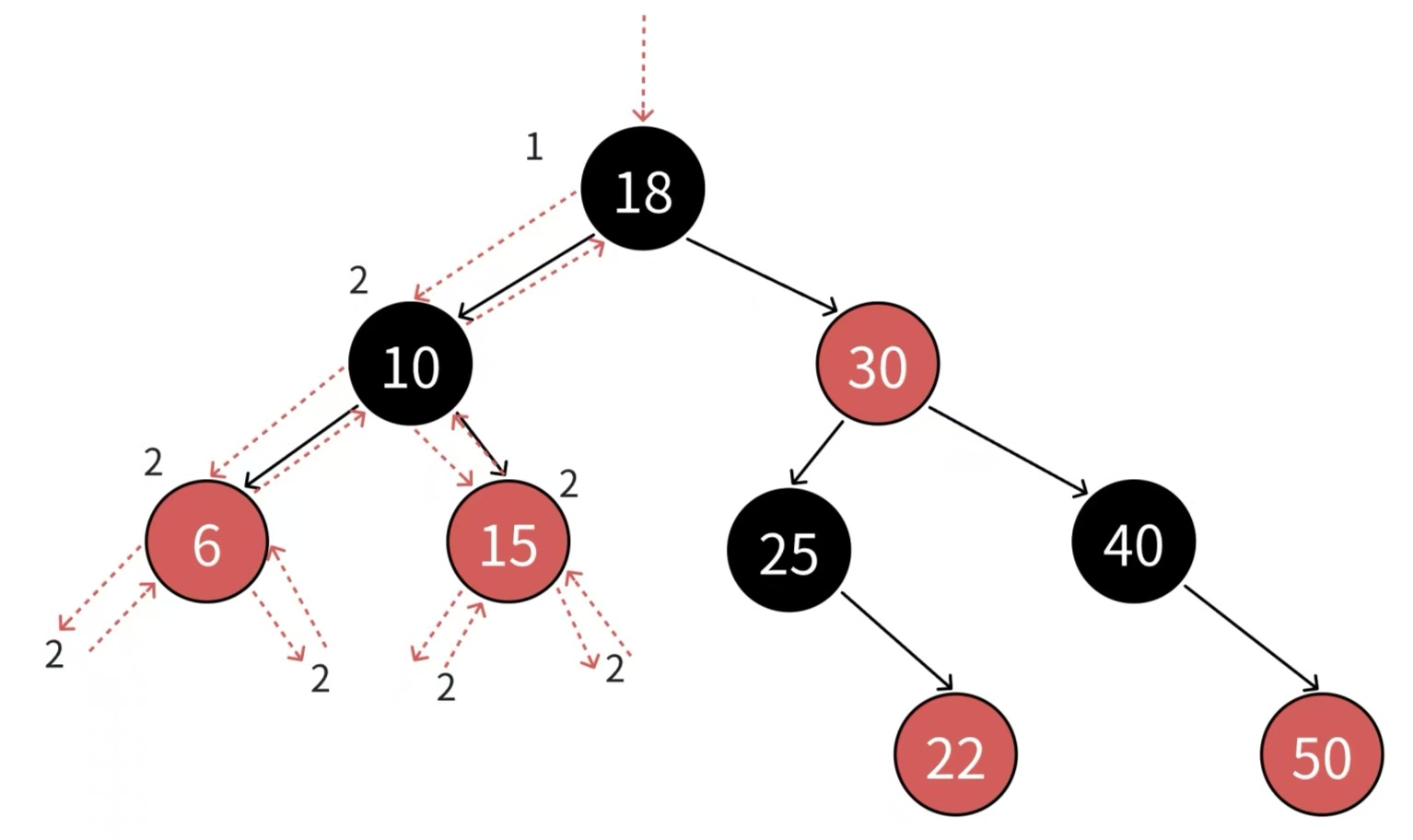
// 检查红黑树是否平衡template<class K, class V>bool RBTree<K, V>::Check(Node* root, int blackNum, const int refNum) { if (root == nullptr) { // 走到空节点,计算当前路径黑色节点数 if (refNum != blackNum) { cout << "存在黑色节点数量不相等的路径" << endl; return false; } return true; }
// 检查规则3:红色节点的父节点不能是红色 if (root->_col == RED && root->_parent && root->_parent->_col == RED) { cout << root->_kv.first << "存在连续的红色节点" << endl; return false; }
// 统计黑色节点数 if (root->_col == BLACK) { blackNum++; }
// 递归检查左右子树 return Check(root->_left, blackNum, refNum) && Check(root->_right, blackNum, refNum);}
template<class K, class V>bool RBTree<K, V>::IsBalance() { if (_root == nullptr) { return true; }
// 规则2:根节点必须是黑色 if (_root->_col == RED) { return false; }
// 计算参考黑色节点数(最左路径) int refNum = 0; Node* cur = _root; while (cur) { if (cur->_col == BLACK) { ++refNum; } cur = cur->_left; }
// 检查所有路径 return Check(_root, 0, refNum);}2.7 红黑树的删除
红黑树的删除操作比较复杂,涉及多种情况的处理:
- 被删除节点有两个子节点
- 被删除节点有一个子节点
- 被删除节点没有子节点
- 删除后需要调整颜色和旋转
主要步骤:
- 按二叉搜索树规则删除节点
- 根据被删除节点的颜色和位置进行调整
- 处理可能出现的”双黑”情况
由于删除操作较为复杂,一般建议参考《算法导论》或《STL源码剖析》进行深入学习。
3. 红黑树与AVL树的比较
| 特性 | 红黑树 | AVL树 |
|---|---|---|
| 平衡标准 | 近似平衡 | 严格平衡 |
| 查找效率 | O(logN) | O(logN) |
| 插入删除效率 | 旋转次数少 | 旋转次数多 |
| 实现难度 | 相对简单 | 相对复杂 |
| 应用场景 | map/set等 | 需要频繁查找的场景 |
4. 总结
红黑树通过颜色约束实现了近似平衡,具有以下特点:
- 查找、插入、删除的时间复杂度都是O(logN)
- 插入和删除的旋转次数比AVL树少
- 实现相对简单,适合作为通用平衡树结构
- 广泛应用于STL的map、set等容器
红黑树的核心在于插入时的四种情况处理,掌握这些情况就能理解红黑树的平衡机制。
文章分享
如果这篇文章对你有帮助,欢迎分享给更多人!